
Diabetic Diet in Canada: Nutrition Strategies From a Diabetes Dietitian
If you’ve recently been told you have pre-diabetes or diabetes or you have a family history and want to lower your risk you’re not alone. Millions of Canadians are living with pre-diabetes without knowing it. The good news? With the right lifestyle tweaks and a food plan built by a diabetes dietitian (also called a diabetic nutritionist), you can stabilise blood sugar with a diabetic diet and feel your best.

Diabetic Diet 101 – Why Blood-Sugar Balance Matters
Your body needs glucose (sugar) for energy – but when blood sugar levels are consistently high, this can damage your blood vessels, nerves, and organs over time. And this can lead to complications in the long run. That’s why learning how to stabilize blood sugar through nutrition and lifestyle is key for long-term health.
We want to keep blood sugar levels within a certain range – not too low, and not too high. If blood sugars are too low, we can faint, or experience symptoms such as shakiness, headaches, and even blacking out.
If blood sugar levels are too high over time, which can lead to diabetes in the long run.
Carbohydrates are the main nutrient that will raise blood sugar levels. However, other nutrients, like protein and fibre content also influence how quickly that spike happens.
Three Core Strategies (and the Best Snacks for Diabetics)
1. Choose High-Fibre, Minimally-Processed Carbs
Swap refined grains for whole-foods rich in fibre – the secret weapon that slows digestion and blunts sugar spikes. Fibre is a type of carbohydrate – but it actually helps to regulate and manage blood sugar levels because it’s not digested in your stomach. Instead, it forms a gel-like substance in the gut, which slows digestion, and helps to stabilize blood sugar levels.
Fibre also helps you to feel more full, which can help with portion control, eating less frequently (not feeling the need to snack constantly!) and weight management.
Diabetic Diet Swaps Look Like:
| Swap out | Swap in |
|---|---|
| White bread | Whole-wheat bread (Silver Hills, Country Harvest) |
| White pasta | Whole-wheat, chickpea pasta or Konjac noodles |
| Sugary cereal | Plain oatmeal, Fibre One, Bran Buds |
| Sugary dessert | Fresh fruit or Greek-yogurt parfait |
| Low-fibre sides | Beans and lentils as your carb choice |
Best snacks for diabetics using this rule: an apple with almond butter, two Wasa crackers topped with low-fat cheese, or roasted chickpeas seasoned with paprika.
2. Control Carb Portion Sizes
Even the right carbs spike glucose if portions are oversized. A simple guide is one cup cooked starch or a tight fistful, per meal. Think:
- 1 cup cooked brown rice instead of a heaping bowl
- 1 cup whole-wheat pasta surrounded by veggies, not vice-versa
I get it. Controlling your carb portion sizes is important. But if we just reduce our carb intake, how do we stay full?
3. Pair Carbs With Vegetables & Protein
Vegetables (the non-starchy ones – minus corn and potatoes!) are high in fibre – which helps with blood sugars are mentioned earlier. It also contains nutrients, and helps to bulk up and volumize your meal to help you to feel more full.
Protein is the most satiating nutrient and also helps to keep you full for longer. It helps to build lean muscle tissue which improves insulin sensitivity (a plus for managing blood sugars!). Protein also helps to slow digestion and absorption of carbs; it acts as a ‘buffer’ towards the carbs you do eat in your meal.
See below for the ‘Plate Model’, which is a good rule of thumb for how to build a blood sugar-friendly and weight management-friendly meal!
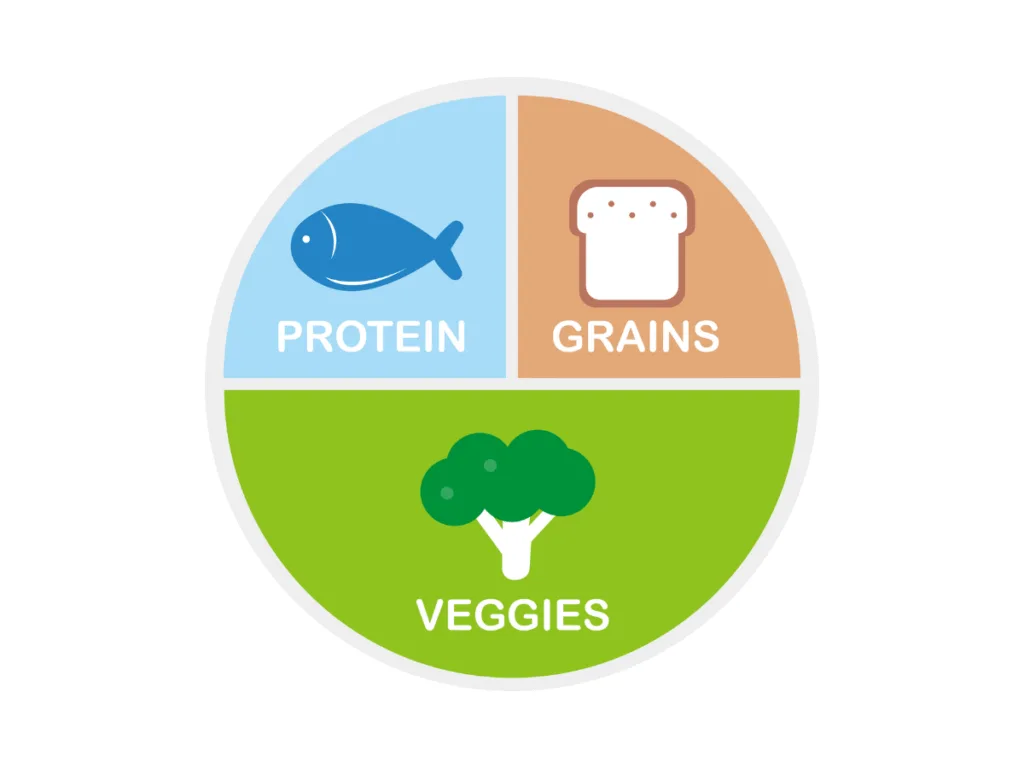
½ plate vegetables • ¼ plate wholesome carbs • ¼ plate lean protein
Beyond Food: Habits That Support Any Diabetic Diet in Canada
- Daily movement – Walking after meals or resistance training uses circulating glucose for fuel and makes cells more insulin-responsive. This means that your body is more effectively able to reduce blood sugar levels after you eat. If you do resistance training, having more muscle in your body also helps improve insulin sensitivity.
- Stress management – Chronic stress hormones (cortisol, adrenaline) raise blood sugar on their own and sap the motivation to eat well. Prioritise sleep, deep-breathing breaks and joyful hobbies.
Working With a Diabetes Dietitian or Diabetic Nutritionist
A regulated Canadian diabetes dietitian can:
- Translate your lab numbers into a personalised meal plan
- Suggest carb goals that match your medications and activity level
- Build shopping lists, quick recipes and best diabetic snacks you’ll actually enjoy
- Monitor progress and adjust portions as your health improves

Quick-Reference Snack List: 10 Best Snacks for Diabetics
- Greek yogurt + berries
- Celery sticks with natural peanut butter
- Hard-boiled egg and a mandarin orange
- Light cheese string + whole-grain rice cakes
- Handful of almonds or walnuts
- Baby carrots with hummus
- Cottage cheese + pineapple chunks
- Roasted edamame or chickpeas
- Small banana with 1 tbsp almond butter
- Mini tuna salad on Wasa crispbread
Each combo pairs moderate carbs with protein, fibre or healthy fat to keep glucose steady.
Key Takeaways
- Focus on high-fibre carbs, sensible portions and protein-plus-veggie pairings.
- Include movement and stress-reduction to enhance insulin sensitivity.
- Team up with a certified diabetes dietitian for a customised Canadian Diabetic Diet plan.
Ready to put these strategies into action? Book a complimentary session with our dietitian team and start crafting a science-backed diabetic diet that fits your life.
Diabetic Diet FAQ
Q: Can I eat carbs if I have prediabetes or diabetes?
A: Yes – you don’t need to cut out carbs entirely, and we’ve never advised a client to do so, since it’s not sustainable in the long run for most people. The key is to choose high-fibre, minimally processed carbs (like oats, lentils, and sweet potatoes) and pair them with protein, fibre, and healthy fats to stabilize blood sugar.
Q: What are the best foods for blood sugar control?
A: Great blood sugar-friendly foods include:
• Leafy greens and non-starchy vegetables
• Whole grains like quinoa, barley, oats
• Legumes (beans, chickpeas, lentils – canned works to help you save time!)
• Lean protein (chicken, tofu, eggs, fish, seafood, Greek yogurt)
• Healthy fats (avocados, nuts, olive oil)
Q: Is fruit okay for blood sugar balance?
A: Yes – fruit contains natural sugars, but also fibre and nutrients. Choose whole fruit over fruit juice, because juice has no fibre and, as a result, will raise blood sugars relatively quickly and high compared to whole fruit. Pair whole fruit with a protein or fat source (e.g., apple + peanut butter) to minimize blood sugar spikes.
Q: How often should I eat to manage blood sugar?
A: A good rule of thumb is to eat every 3–5 hours. Try to avoid skipping meals or going longer than 6 hours between meals, as this can lead to excessive hunger, dips in blood sugar levels, and encourage overeating on less healthy foods later on!
Q: Can weight loss help with blood sugar control?
A: Yes. Research shows that even a 5–10 % loss in your current weight can improve insulin sensitivity and help reduce fasting blood sugar levels. Of course, the focus should be on sustainable, healthy habits, rather than crash dieting or being too restrictive, as this doesn’t last for long.